Setting Up the Perfect Sound System: A Guide to Home Theater Electronics

When it comes to creating a truly immersive home theater experience, sound quality is just as crucial as video quality. A well-planned home theater electronics setup can transform your living room into a cinematic soundscape, making you feel as though you're part of the action. In this guide, we’ll cover the essentials of building a sound system, from choosing the right components to perfecting speaker placement.
Key Components of a Home Theater Sound System
Before diving into setup tips, let’s explore the main components you’ll need for an effective home theater electronics sound system:
1. Receiver (AV Receiver)
The AV receiver is the central hub of your home theater setup. It connects and powers all of your audio and video devices, ensuring they work seamlessly together. Look for a receiver with support for Dolby Atmos, DTS
, and other advanced audio formats for maximum audio quality.
2. Front Speakers
These are your main speakers and should be positioned on either side of the screen. Front speakers handle most of the audio, especially dialogue and action sounds, so investing in high-quality models is essential.
3. Center Speaker
The center speaker focuses on delivering clear dialogue. Placed directly below or above the screen, it ensures voices sound crisp and natural.
4. Surround Speakers
These speakers are responsible for delivering background sounds and effects, creating an enveloping audio experience. Place them to the sides or behind the viewing area for an immersive effect.
5. Subwoofer
A subwoofer handles low-frequency sounds, like explosions and bass-heavy music, adding depth and impact to the audio. A good subwoofer is crucial for the full theater experience.
6. Height Speakers (Optional)
If you’re aiming for a next-level audio experience, height speakers create a 3D soundscape by adding overhead audio effects, perfect for Dolby Atmos setups.
Choosing the Right Speakers
When selecting home theater electronics, particularly speakers, consider both quality and compatibility with your room size. Here are a few factors to keep in mind:
Speaker Size and Power
For larger rooms, larger speakers with higher wattage may be necessary to fill the space with sound. Smaller rooms can usually achieve excellent sound quality with compact speakers.
Matching Speaker Brands
For the best audio cohesion, it’s advisable to use speakers from the same brand or product line, as they are typically designed to work together for balanced sound.
Wired vs. Wireless Speakers
Wireless speakers have become increasingly popular, offering flexibility in placement. However, wired speakers are still preferred by many audiophiles for their stable, high-quality sound.
Selecting the right speakers is one of the most important steps in your home theater electronics setup. Take the time to research and test different models to find the perfect fit for your space.
Speaker Placement Tips for Optimal Sound
Once you have your speakers, placement is key to achieving the best sound quality. Here’s how to position each speaker for maximum impact:
Front and Center Speakers
- Front Speakers: Place the left and right front speakers at ear level and angle them slightly towards the seating area for optimal clarity.
- Center Speaker: The center speaker should be directly above or below the screen and aimed towards the main seating area to ensure dialogue is heard clearly.
Surround Speakers
Position the surround speakers slightly above ear level, ideally on the sides or behind the viewing area. For a 5.1 setup, two surround speakers on each side are sufficient, while a 7.1 setup requires rear surround speakers as well.
Subwoofer Placement
The subwoofer can be placed almost anywhere in the room, but placing it near a wall or corner can amplify bass effects. Experiment with different spots to find the best position, as subwoofers are sensitive to room acoustics.
Height Speakers (if applicable)
If you’re using height speakers for a Dolby Atmos setup, mount them on the ceiling or use upward-firing speakers that reflect sound off the ceiling to create an overhead audio effect.
Proper speaker placement is essential for getting the most out of your home theater electronics. Each adjustment can bring your audio closer to the movie theater experience.
Optimizing Your Receiver Settings
Once your speakers are positioned, it’s time to configure your AV receiver settings to ensure each component is performing optimally. Here’s a quick guide to setting up your receiver:
Speaker Calibration
Most modern AV receivers come with an auto-calibration feature that uses a microphone to detect speaker distances, levels, and room acoustics, then optimizes settings accordingly. Use this feature to get the best sound balance across all speakers.
Audio Format Settings
If your receiver supports Dolby Atmos or DTS
, make sure these formats are enabled for compatible content. This will allow you to enjoy the full 3D sound experience.
Bass and Treble Adjustments
Adjust the bass and treble levels to match your personal preference. Increasing bass can add more impact to action scenes, while adjusting treble can make dialogue clearer.
Room Correction
Some receivers offer room correction technology that tailors audio output based on room acoustics. This feature is particularly helpful in irregularly shaped rooms or those with a lot of furniture.
Setting up your receiver correctly ensures that your home theater electronics are optimized for the best audio performance, enhancing every detail of your sound system.
Common Sound System Configurations
Depending on your preferences and room size, there are several popular configurations for home theater electronics sound systems. Here are the main setups:
5.1 Channel System
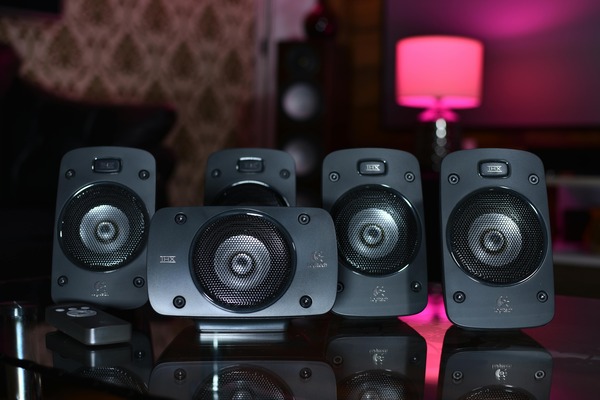
A 5.1 system includes five speakers (two front, one center, and two surrounds) and one subwoofer. This setup provides immersive surround sound and is ideal for small to medium-sized rooms.
7.1 Channel System
A 7.1 system adds two rear speakers to the 5.1 setup, enhancing the surround sound effect and providing better coverage in larger rooms.
Dolby Atmos (5.1.2 or 7.1.4)
Dolby Atmos systems add height channels, allowing sound to move above and around the audience. In a 5.1.2 setup, you have five main speakers, one subwoofer, and two height channels; a 7.1.4 setup has seven main speakers, one subwoofer, and four height channels for a truly immersive experience.
Selecting the right configuration ensures your home theater electronics are tailored to your space, delivering the best possible audio quality for your home theater.
Fine-Tuning for the Best Experience
After setting up and configuring your sound system, take time to fine-tune the audio. Listen to different types of content—movies, music, games—to identify any adjustments you might need. Tweak your receiver settings and experiment with speaker placement to get the most satisfying sound possible.
Building the perfect sound system for your home theater requires planning and precision, but the reward is a richer, more immersive audio experience. By investing in high-quality home theater electronics and setting them up properly, you’ll enjoy cinema-quality sound every time you sit down to watch.
Creating a high-performance sound system doesn’t have to be complicated. With the right home theater electronics and a careful setup, you can bring the theater experience home, making every viewing session a truly unforgettable one.
About the Author